Your Shaky, Overexposed Footage Is the History Book Nobody Knew We Needed
Somewhere on a hard drive, or buried three folders deep in a cloud account you forgot you were paying for, there is a video. It is maybe forty-five seconds long. The first eight seconds are the floor. Someone's thumb covers roughly a third of the frame for the entire duration. The audio is a wall of ambient noise interrupted by a single, inexplicable shriek. You filmed it at a Chili's that has since become a Spirit Halloween that has since become a vape shop. You have never watched it back. You uploaded it to GlumboUploads in 2018 and immediately forgot it existed.
Congratulations. You are an archivist.
The Lie of the Official Record
Here is the uncomfortable truth that media scholars have been quietly wrestling with for years: polished, professionally produced content is, almost by definition, a negotiated version of reality. News packages get edited. PR teams approve B-roll. Documentaries have narratives to serve. Even the stuff that feels raw has usually been through at least three rounds of someone deciding what stays and what ends up on the cutting room floor.
Your video of your uncle attempting to parallel park a rented minivan outside a Cracker Barrel in Tennessee? Nobody made any decisions about that. It exists in its full, unmediated, seventeen-minute glory, complete with the argument that started in the parking lot and the exact song that was playing on the radio when he finally gave up and used two spots. That is not a flaw. That is primary source material.
Actual historians—the kind with tenure and sensible shoes—have been saying for a while now that the most valuable archives are usually the ones nobody meant to create. Letters people dashed off without thinking. Grocery lists. Margin notes in library books. The stuff that wasn't performing for anyone. Your blurry uploads fit neatly into that tradition, except instead of being discovered in someone's attic in 2090, they are already technically accessible right now and nobody is looking at them. Yet.
The Strip Mall as Time Capsule
Let's talk about the strip mall video, because this is where it gets genuinely poignant and slightly absurd at the same time, which is basically the GlumboUploads brand promise.
America's commercial landscape changes with a speed that is almost violent. A Blockbuster becomes a Planet Fitness becomes a discount mattress store becomes a ghost. A beloved local diner gets replaced by a regional chain that itself closes eighteen months later. The physical fabric of everyday American life is in constant, low-grade flux, and almost none of it gets formally documented because nobody thinks it's worth documenting until it's gone.
Except people film it constantly by accident. Someone shoots a video outside a mall entrance to show their friend where to meet them, and in the background there's a store that closed in 2019. Someone captures a drive down a commercial strip on the way to something else, and now that footage is the only existing record of what that stretch of road looked like before the highway expansion. The subject of the video is irrelevant. The background is the archive.
This is not a small thing. Urban historians and preservationists have increasingly turned to exactly this kind of incidental footage to reconstruct what places looked like at specific moments in time. The video doesn't have to be good. It just has to exist.
Why the Imperfections Are the Point
There is a paradox at the center of all this, and it is a genuinely interesting one. The qualities that make a casual upload feel worthless—the bad lighting, the shaky camera, the wrong timestamp because nobody ever fixed the clock after daylight saving, the audio that's mostly wind—are precisely the qualities that make it trustworthy as a document.
Professional media is lit to communicate a mood. Casual uploads are lit however the overhead fluorescents in your aunt's kitchen decided to behave that afternoon. Professional media is framed to direct your attention. Casual uploads capture whatever happened to be in the frame because the person filming was also trying to hold a paper plate. Professional media has a thesis. Casual uploads have no thesis whatsoever. They are thesis-free zones. And that absence of intent is exactly what makes them valuable.
Future researchers—and yes, this is a real conversation happening in archival and digital humanities circles—are going to have access to an almost incomprehensible volume of casual footage from the 2010s and 2020s. The challenge won't be finding records of what American life looked like during this period. The challenge will be sorting through the absolute mountain of it. Your Thanksgiving disaster video is not an outlier. It is part of a vast, chaotic, beautiful corpus of accidental documentation.
The Concert Nobody Else Filmed
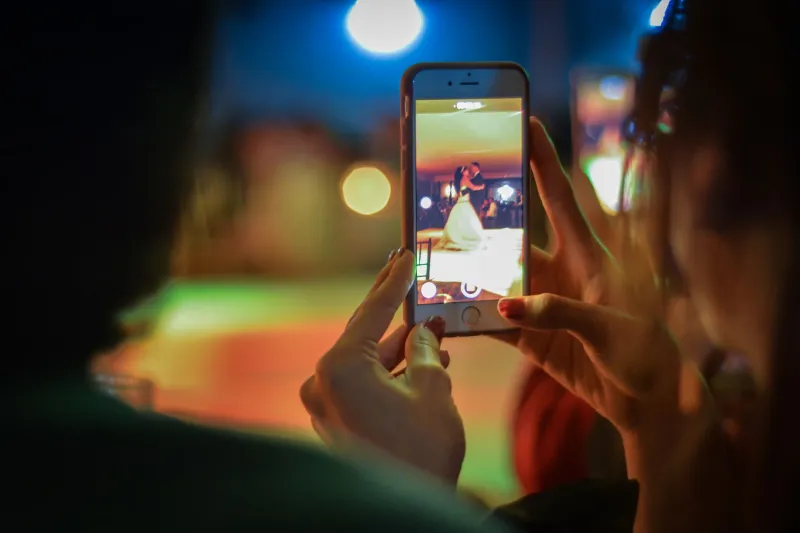
Here is a specific case worth sitting with. A band plays a mid-sized venue in, say, Columbus, Ohio, in 2015. They are not famous. The show is not reviewed. No professional photographer is there. But six people in the crowd film pieces of it on their phones—badly, from weird angles, with audio that clips every time the bass hits. One of those clips gets uploaded and mostly ignored.
Ten years later, that band has a moment. People go looking for footage of the early shows and there is almost nothing. Except that one upload. Thirty-two seconds of a song, half-obscured by someone's head, with a timestamp that is definitely wrong, uploaded by an account that hasn't been active since 2017. It is the only visual record that the show happened at all.
This scenario plays out constantly, across music and sports and local events and community moments that never made it onto any official radar. The upload that felt like nothing turns out to be the whole record.
What GlumboUploads Actually Is (Besides a Place to Put Your Weird Stuff)
We are, and we say this with complete sincerity underneath the bit, a distributed archive of American life in real time. Every chaotic family gathering, every badly-filmed local news moment someone caught through a window, every forty-second clip of a dog doing something inexplicable in a parking lot—it all goes into the pile. The pile is enormous. The pile is, arguably, priceless.
So next time you are about to delete something because the quality is bad or the subject is embarrassing or you just don't see the point of keeping it: don't. Upload it. Slap a vague title on it. Let it sit.
Somebody, someday, is going to need exactly that footage of the Applebee's that used to be on Route 9. And you are the only one who has it.